
Entertainment
Cricket 26 Patch 80: The Final Nail in a Coffin Built by Incompetence

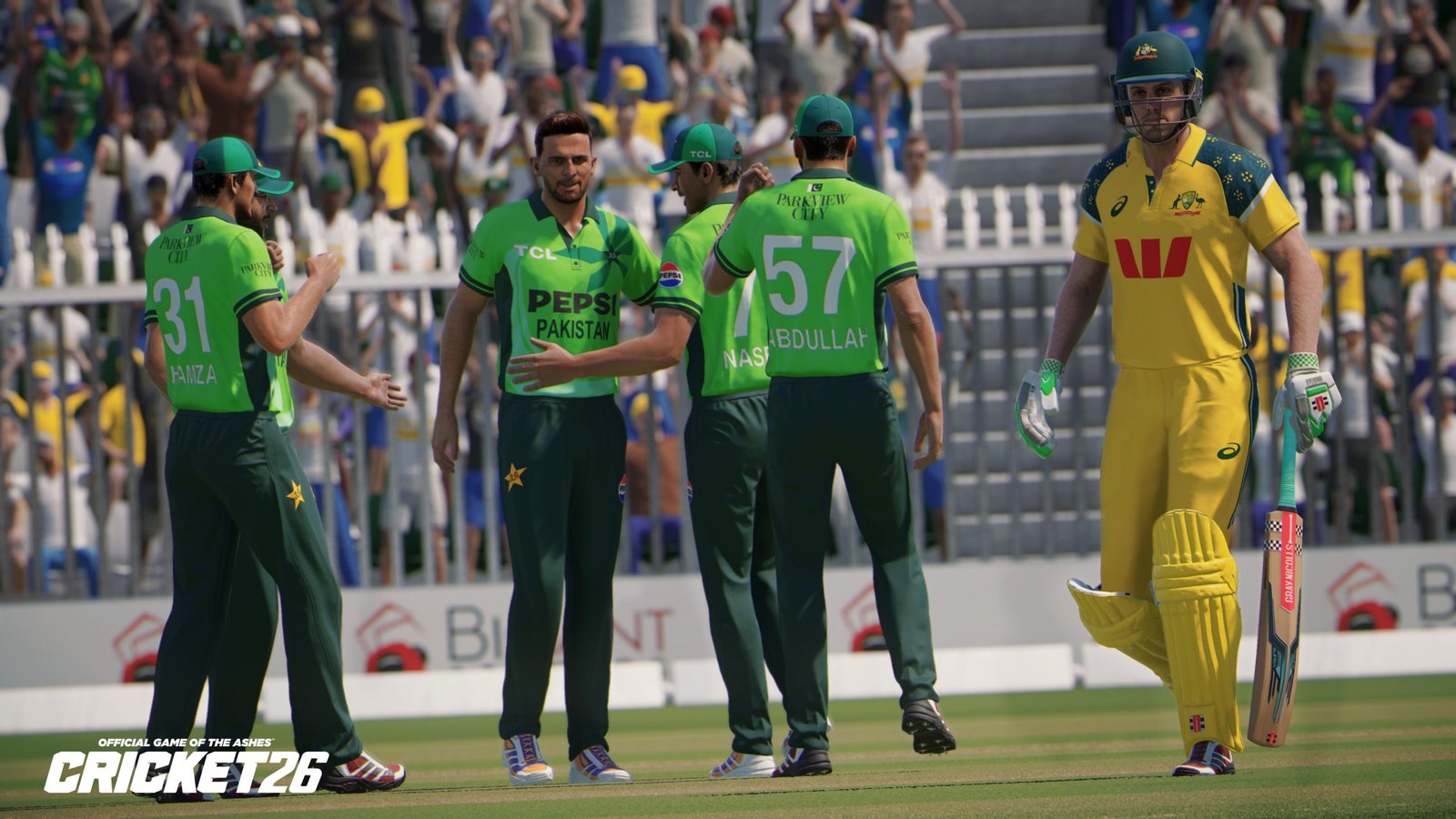
From Playable to Unplayable: How Big Ant Studios Took a Recovering Game and Drove It Off a Cliff
In the tumultuous history of sports gaming, few studios have demonstrated such a remarkable talent for snatching defeat from the jaws of victory as Big Ant Studios. Just when the community dared to breathe a sigh of relief after Patch 76 finally made Cricket 26 resemble a functional game, along comes Patch 80 to remind us all that hope is a dangerous thing. Based on extensive feedback from real online players and the passionate community that has made this franchise what it is, we at WCRCLEADERS are compelled to document what can only be described as a catastrophic regression.
The gamers who trusted this studio, who purchased their product, who invested countless hours into providing constructive feedback, are now left with a singular, burning question: Do the developers at Big Ant Studios even play their own game?
The Tragic Irony: Older Titles Were Better
Perhaps the most damning indictment of Cricket 26 is the simple fact that Cricket 22 and Cricket 24 were far better and more consistent games. Those titles, despite their own imperfections, delivered a reliable, enjoyable experience that kept communities thriving for years. Players knew what to expect. Matches could be completed. The core mechanics, while not perfect, functioned as intended.
Cricket 26, by contrast, represents a baffling regression. It’s as if the studio deliberately unlearned every lesson from their previous successes, replacing proven mechanics with broken experiments and calling it “innovation.” The community didn’t ask for a revolution; they asked for evolution. What they got was a Frankenstein’s monster of half-baked ideas and discarded functionality.
A veteran player who has owned every title since Cricket 16 told us:
*”I reinstalled Cricket 24 last night. You know what? It works. The lobbies have players again. The matches finish. The fielders field. I played for four hours without a single crash. Four hours! That’s more than I’ve managed in Cricket 26 across the entire past month. It’s embarrassing that a two-year-old game outperforms the ‘new and improved’ version in every conceivable way.”*
The Lone Bright Spot: A Glimmer of Genius in a Sea of Failure
Fairness demands acknowledgment of what Cricket 26 actually got right. In a game otherwise defined by its failures, one feature stands as a genuine achievement: every pitch plays differently, and timing for every pitch is unique.
This is not a small thing. The variability between surfaces—the way a pitch in Mumbai behaves differently from one in Melbourne, the way timing windows shift based on conditions—adds a layer of strategic depth that previous titles lacked. Players must genuinely adapt, adjusting not just their shot selection but their entire approach based on the specific match conditions.
“I’ll give them this,” admitted a skeptical league player. “When I play a Test at The Gabba versus a T20 in Karachi, it actually feels different. The ball behaves differently. My timing has to adjust. That’s real cricket. That’s what simulation should feel like. It’s just tragic that everything surrounding this brilliant feature is broken garbage.”
This lone positive only makes the game’s failures more painful. It proves that the developers can innovate meaningfully. It proves they understand some aspects of what makes cricket special. And yet, they have allowed this genuine achievement to be buried under an avalanche of crashes, glitches, and inexplicably poor design decisions.
The Technical Apocalypse: When Nothing Works
Let us begin with the most fundamental failure: the game simply does not function. Players across all platforms report constant crashing that makes even launching a match an exercise in futility. The experience is so broken that one online league veteran told us:
“I’ve tried 12 times in two days to complete a single online match. Twelve times. I’ve seen more loading screens than actual cricket. It’s genuinely impressive how they’ve managed to make a game that crashes more reliably than it runs.”
The cross-console crashing deserves special mention as a monument to technical negligence. In an era where seamless cross-platform play is the industry standard, Big Ant has somehow delivered an experience where players on different consoles cannot trust that their match will survive beyond the first over. The result is a fractured community, afraid to queue for matches that will inevitably end in error screens rather than victories.
Perhaps the most infuriating addition is the new auto-abandonment system. One player described their experience:
*”I was 45 not out, chasing 180 in a T20. Game was beautifully poised. Then a two-minute ‘rain delay’ triggered by nothing—not a cloud in sight—and suddenly the match is abandoned. No warning. No option. Just a giant middle finger to 45 minutes of my life. Who thought this was a good idea?”*
These weather delays, coupled with inexplicable game abandonments, have transformed Cricket 26 from a sports simulation into a Russian roulette simulator. Will you complete your match? Will it crash? Will it decide it’s raining in a virtual stadium with perfect blue skies? The suspense is genuinely nerve-wracking—just not in the way sports games should be.
The Gameplay Catastrophe: A Beautiful Game Murdered
Patch 76 had achieved something remarkable: it made Cricket 26 playable. The batting felt responsive, the bowling required skill, and for a glorious moment, the community allowed itself to believe. Then came Patch 80, and with it, the wholesale destruction of everything that had been fixed.
The fielding mechanics have descended into farce. In what can only be described as a deliberate sabotage, fielders now exhibit the athletic prowess of comatose statues. A player from a top online league shared his frustration:
“I watched the ball trickle past a fielder at mid-off today. He was standing there. He looked at it. He did nothing. The batsmen ran two. Two! In what universe does a professional cricketer watch the ball roll past him and just… accept it? My grandmother has better reflexes, and she’s been dead for a decade.”
The lack of fielder reaction has created a bizarre meta where infield singles are guaranteed. Why attempt risky shots when you can simply tap the ball gently toward fielders who have collectively decided that fielding is optional? As another player noted:
“I’ve stopped trying to hit boundaries. Why bother? Just nudge it to cover, watch the fielder have an existential crisis, and jog through for an easy run. It’s not cricket. It’s a walking simulator with occasional bat swings.”
The Bowling Meta: Same Exploits, New Patch
Despite promises of balance, wide line spamming remains the dominant online strategy. Outswingers delivered from extreme wide angles are essentially unplayable, yet the game provides no reliable shot to counter them. A league administrator told us:
“Our tournaments have become farces. Every match devolves into bowlers standing as wide as physically possible, swinging the ball miles, and watching batters flail helplessly. There’s no skill. There’s no contest. It’s just whoever exploits the broken mechanics more effectively.”
While point lofted shots exist as a theoretical counter, they require pure premeditation to execute. In a game that should reward reaction and skill, players are forced to guess which wide line is coming and commit before the ball is even delivered. Miss the guess, and you’re beaten. This isn’t cricket; it’s gambling with a controller.
The Animation Disaster: Players from Another Dimension
Player movement and animations have reached new depths of absurdity. The fluidity promised in pre-release marketing materials is nowhere to be found. Instead, players lurch across the turf with all the grace of intoxicated penguins. Running between wickets resembles a slapstick comedy, with batsmen teleporting, freezing, and occasionally deciding mid-run to simply stop and admire the scenery.
One community member who has played every iteration since Cricket 16 observed:
*”In Cricket 22 and Cricket 24, sure, leg-side shot power was underwhelming. But the off-side made up with functional auto-shots. You could build an innings. You could construct a chase. Cricket 26 is a complete puzzle. Nothing connects. Nothing makes sense. It’s like they deliberately unlearned everything that worked.”*
Ball Spotting: The Premeditation Lottery
The much-celebrated ball spotting improvements from Patch 76 have been completely undone. Reading deliveries now requires psychic abilities rather than skill, forcing players back into the premeditation prison that made earlier patches so frustrating.
“I’ve given up trying to react,” confessed a top 50 online player. “I just pick a line before the ball is bowled and hope. Sometimes I’m right, sometimes I’m embarrassingly wrong. But at least premeditating gives me a 50% chance. Reacting to whatever nonsense the game throws at me gives me zero.”
The Development Disconnect: Who Is Testing This?
The fundamental problem, as identified by the community, is clear: Big Ant Studios does not test their game against quality online players. The development team appears isolated from the competitive ecosystem, making changes based on feedback from sources that do not represent the core audience.
A prominent league organizer from RPLGaming—one of the most respected competitive cricket gaming communities—shared his frustration:
“We’ve offered to help. Multiple times. We have hundreds of the best players in the world, thousands of hours of competitive experience, and a genuine desire to see this game succeed. They’ve never taken us up on it. Instead, they listen to… who? Newbies who don’t understand the meta? Incompetent online groups who complain about the wrong things? The result is what you see: a game that gets worse with every patch.”
This disconnect explains everything. When developers balance based on casual feedback rather than competitive reality, they create games that satisfy no one. The casual players get bored, the competitive players get frustrated, and the community slowly dies.
“I submitted detailed bug reports with video evidence for three months,” another player told us. “Do you know what changed? Nothing. Absolutely nothing. I might as well have been shouting into the void. They don’t read. They don’t care. They just push patches that break new things.”
The Community Exodus: From Thriving to Barren
The evidence of failure is visible to anyone who opens the game. The online lobbies and Five5 mode—once vibrant communities buzzing with activity day and night—now sit empty. A player who has been part of the online scene since Cricket 16 lamented:
“I remember when you couldn’t find an empty lobby at 3 AM. There were always matches, always players, always competition. Now? I queue for twenty minutes and get nothing. The community hasn’t moved elsewhere. It’s just… given up. We’ve lost hundreds of active players because of this debacle.”
Online leagues that once ran continuous tournaments have virtually vanished. Administrators tired of explaining crashes, disconnections, and broken mechanics to frustrated participants have simply stopped organizing. The competitive ecosystem that took years to build has been destroyed in months.
The Monopoly Problem: Why Big Ant Can Get Away With This
The uncomfortable truth underlying this entire disaster is that Big Ant Studios faces no meaningful competition in the cricket gaming space. Companies like EA Sports and 2K, despite their resources and expertise, have not entered the market. This monopoly has bred precisely what one would expect: complacency, contempt for consumers, and products that degrade rather than improve over time.
“They know we have nowhere else to go,” a frustrated player told us. “That’s the real insult. If EA made a cricket game tomorrow, Big Ant would be bankrupt within a year. They survive because we have no alternatives, and they repay our loyalty by treating us like ATMs that occasionally complain.”
This sentiment was echoed by another community member:
“I’ve spent over $200 on Big Ant products across the years. I’ve defended them to friends who laughed at the glitches. I’ve written detailed feedback hoping to help. And this is what I get? A game that crashes more with every patch, that gets less playable with every update? They’ve taken my money and my passion and flushed them both down the toilet.”
Legal Threats and Consumer Outrage
The frustration has reached such levels that players are now threatening legal action against Big Ant Studios. While the viability of such lawsuits remains questionable, the sentiment reflects the depth of betrayal felt by consumers who paid premium prices for a product that fails at the most basic level.
“I paid $70 for this game. Seventy dollars. That’s not pocket change. That’s a AAA price for a game that crashes more than a 1990s shareware title. If they think they can just take my money and deliver this garbage without consequence, they’re about to learn otherwise. Class action lawyers exist for a reason.”
Another player shared:
“The crashes, the stutters, the abandonments—it’s not just disappointing, it’s fraudulent. They sold us a product based on promises of improved graphics and licenses, and delivered something that doesn’t function. That’s not bad development; that’s misrepresentation.”
The Glaring Truth: Graphics Cannot Save a Broken Soul
Yes, Cricket 26 has better graphics than its predecessors. Yes, the licenses are impressive. But these superficial improvements only make the core failures more painful. It is a beautiful corpse—stunning to look at, impossible to interact with.
“I stare at the menu screens sometimes,” admitted one player. “They’re gorgeous. The player models are incredible. And then I start a match, and within five minutes, I’m watching a fielder run through the boundary rope or the ball phase through a bat or the game just… stop. It’s like dating a supermodel who’s a terrible person. Looks great for photos, unbearable to actually spend time with.”
The Lone Bright Spot Revisited: Why It Makes Everything Worse
The fact that pitch variability and timing uniqueness actually work well only deepens the tragedy. It proves that somewhere within Big Ant Studios, there are developers who understand cricket, who care about simulation, who want to create something special. But their good work has been buried under layers of technical incompetence, poor testing protocols, and a development philosophy that prioritizes change over stability.
“The pitch system is brilliant,” conceded a league player. “It’s genuinely the best innovation in cricket gaming in years. And it’s trapped inside a game that crashes constantly, fields like amateurs, and gets worse with every update. It’s like finding a Michelin-star meal served on a toilet seat. The good part just makes the rest more insulting.”
Conclusion: A Franchise on Life Support
Patch 80 represents more than a bad update; it represents a philosophical failure at the heart of Big Ant Studios. The pattern is undeniable: release unfinished, break with patches, partially fix, break again. Each iteration erodes more trust, drives away more players, and makes the eventual recovery—if any—more difficult.
The community’s message to Big Ant Studios is simple and unified: Stop. Listen. Fix.
Stop releasing patches that break more than they repair. Stop balancing based on feedback from sources that don’t represent your core audience. Stop treating your most loyal players as inconveniences rather than partners.
Listen to the leagues, the administrators, the veterans who have thousands of hours in your games. They don’t want to see you fail. They want to see you succeed. They want a game they can be proud to play, proud to stream, proud to recommend.
Fix the crashes. Fix the fielding. Fix the bowling exploits. Restore the balance that Patch 76 briefly achieved. And then, for the love of everything sacred, stop changing things that work.
The cricket gaming community is passionate, loyal, and forgiving. They have proven this by sticking with Big Ant through multiple broken launches and questionable decisions. But patience is not infinite, and loyalty is not unconditional.
Patch 80 may be remembered as the moment the community finally broke. The lobbies are empty. The leagues are silent. The players who once defended the franchise now lead the charge against it.
There is still time to reverse course. There is still time to deliver the game that was promised. But that window is closing rapidly, and with each broken patch, each ignored complaint, each abandoned feature, the sound of that window slamming shut grows louder.
Big Ant Studios, the ball is in your court. For once, try not to miss it.
Five Voices of the Community: Real Quotes from Real Players
“I’ve never felt so robbed in my gaming life. Patch 76 gave me hope. Patch 80 crushed it. I’m done. I’m genuinely done. They won’t get another penny from me.”
— Rahul, Mumbai, 8-year cricket gaming veteran
“The fielders in this game are worse than useless. They actively sabotage matches. I’ve watched balls roll past stationary players more times than I can count. It’s not a bug anymore; it’s a feature at this point.”
— Ahmed, Lahore, online league administrator
“Big Ant doesn’t test with real players. They don’t consult competitive leagues. They make changes in a vacuum and wonder why the community rejects them. It’s arrogance bordering on self-destruction.”
— Pushkar Tiwari, Lucknow, GamingStation
“I reinstalled Cricket 24 last night. It works. The lobbies have players. The matches finish. Why did I ever upgrade?”
— Daniel, London, content creator
“The pitch system is genuinely brilliant. It’s the only reason I still have the game installed. Everything else is broken, but that one feature taunts me with what could have been.”
— Vikram, Delhi, competitive player since Cricket 19



In its current state, Cricket 26 is not merely a bad game; it is a non-functional product sold at a premium price. The 0.5 point in the rating below is a charitable acknowledgment of the artists who worked on the graphics and the scribbled notes somewhere that contained good ideas. Everything else—the broken gameplay, the stolen fun, the betrayal of community trust—actively subtracts from the experience. This rating reflects not just poor quality, but the active harm done to the cricket gaming landscape and its passionate fans.
Rating: 1.5 / 10
We retain a sliver of hope that Big Antz will heed this unified call. Should they channel their expertise into correcting these foundational errors, a redemption story could be written. We would be overjoyed to compose a follow-up, praising a genuine comeback. Until then, this rating stands as a warning and a testament to one of the most squandered opportunities in recent sports gaming history.
There is a profound difference between a game that is challenging and a game that is broken. One tests your skill; the other tests your patience. With Cricket 26, Big Antz Studios—a seasoned veteran in digital cricket—has tragically delivered the latter. This is not merely a critical review; it is a chronicle of promise unfulfilled, of grand ambition colliding with a shocking disregard for foundational quality. The ideas behind this installment are among the best the studio has ever conceived, yet the execution has produced what is, in its current state, their most dysfunctional and frustrating release to date.
The Phantom Promise: What Could Have Been
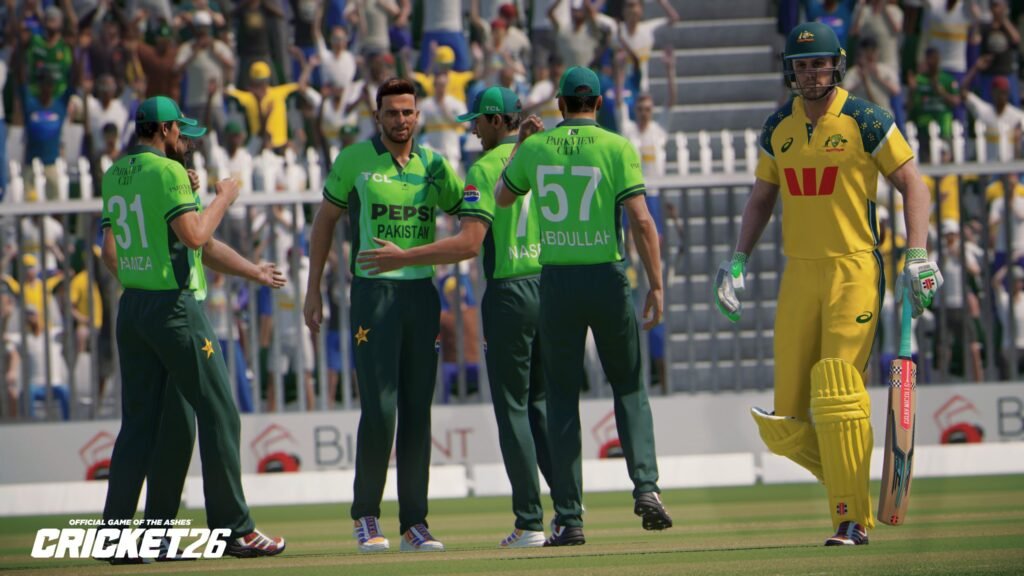
To be fair, the blueprint for a masterpiece is visible. Cricket 26 boasts the most impressive graphical fidelity the series has seen. Stadiums are detailed, player models are refined, and the initial presentation hints at a deeper, more immersive simulation. The intent to create a nuanced, competitive, and authentic cricket experience is commendable. For a fleeting moment, it feels like the next evolution.
The most stinging betrayal is financial. Loyal fans and competitive online gamers, yearning for a next-generation cricket experience, waited patiently and invested a full USD 60 in a Day 1 copy. What they purchased was not a polished product but an unstable, glitch-ridden beta masquerading as a finished game. This isn’t just disappointment; it’s a calculated breach of trust. Players paid for the thrill of competition, the joy of stroke play, and the integrity of online leagues. Instead, their investment returned a torrent of crashes, teleporting fielders, and exploitable physics that robbed them of fun and fair play from the very first session.
Then, you start playing.
The Ten Commandments of Failure: Why Cricket 26 Crumbles
What follows is a systemic breakdown of the core experience, a list of failures so fundamental they baffle the mind given the developer’s pedigree.
-
The Pathetic Patch Cycle: Updates have been deployed, yet core game-breaking issues persist. This isn’t a matter of fine-tuning; it’s a failure to address the engine’s rot, eroding all player trust.
-
The Teleportation Debacle: Fielders do not run; they stutter and warp across the turf. This isn’t a minor visual bug—it destroys match physics, makes a mockery of strategy, and shatters immersion instantly.
-
Chronic Instability: The game crashes with predictable regularity, especially during online matches. There is no greater insult than a disconnected game, robbing players of time and competitive effort.
-
The Powerless Bat: Batting feels like swinging a feather. Shots, particularly on the off-side, lack any visceral weight or power. Perfect timing yields mediocre results, stripping away the basic reward of connection.
-
Unnatural, Unreadable Swing: The ball physics defy logic. Swing is exaggerated and erratic, making it impossible to judge line and length consistently. You’re not reading the bowler; you’re deciphering a glitch.
-
The Online Bowling Meta-Game: This broken swing creates an unfair online environment. Human bowlers exploit it to deliver unplayable, spot-bowling spells that feel less like skill and more like an abuse of faulty mechanics.
-
Superhuman, Anticipatory Fielding: Fielders are psychic athletes with magnetized hands and rocket arms. They consistently perform reactionary saves that are physically impossible, turning potential boundaries into certain dot balls.
-
Dull, Washed-Out Broadcasts: For a sport of vibrant colors, the in-game presentation is surprisingly flat and lifeless, particularly when streamed. It lacks the punch and dynamism needed for modern digital content.
-
Cross-Platform Chaos: The experience is wildly inconsistent across consoles, with varying crash rates and performance issues. There is no standard version of the game, only varying degrees of broken.
-
The Frustration Symphony: All these elements combine into an online experience that is the antithesis of fun. It is a glitch-ridden, unstable, and deeply unfair arena that actively punishes players for participating.
How Does a Veteran Stumble on the Basics?
This is the central, bewildering failure. Big Antz created Cricket 19, a game remembered fondly for its balance and enjoyability. With Cricket 26, the pursuit of a specific, hardcore realism has seemingly overwritten the fundamental need for a stable, fair, and enjoyable gameplay loop. A game can be a bowler’s paradise without feeling like a batter’s torture chamber engineered by bugs.
A Roadmap to Salvation: What Must Be Fixed
The path forward is clear, defined by community outcry:
-
Priority Zero: Stability. One dedicated, massive patch to eliminate crashes and teleportation glitches. Nothing else matters until this is achieved.
-
Restore the Power: Rebalance batting to make shot-making feel powerful and rewarding. A well-timed drive should race to the boundary.
-
Sanity in Physics: Overhaul ball swing and fielding mechanics to be challenging yet predictable and fair.
-
Purify Online Play: Invest in netcode and integrity to make online matches about skill, not exploitation.
-
Polish the Presentation: Inject vibrance and dynamism into the visual broadcast package.
Conclusion: A Hope Against Hope
Cricket 26 is a ghost of a great game. Its potential haunts every glitch-filled session. This review, critical as it is, is written with a reluctant heart. We see the diamond underneath the rubble.
The difference between a hard game and a broken one is the difference between a worthy opponent and a broken controller. Right now, players are fighting the latter.
We retain a sliver of hope that Big Antz will heed this clear, unified feedback. Should they channel their expertise into correcting these foundational errors, a remarkable redemption story could be written. We would be overjoyed to compose a follow-up, praising one of gaming’s great comebacks. Until then, the wait for a truly great modern cricket game continues—a wait made all the more bitter by knowing how close, and yet how far, Cricket 26 actually is.

The Cover Story World is a premier global platform that showcases the world’s most influential and fastest-growing leaders across business, innovation, culture, and impact. Known for its authoritative rankings, exclusive leadership features, and international summits, The Cover Story highlights the people and ideas redefining success in the 21st century. From industry disruptors to purpose-driven entrepreneurs, it’s where visionary leadership meets global recognition—amplifying stories that inspire, influence, and lead the world forward.
How Does One Brain Speak Two Languages?

U.S.-Iran Agreement Leaves Lebanon’s Fate Murky
Here’s the latest.





-
News Shots11 months ago
Israeli Strike in Gaza City Kills at Least 11 People, Officials Say
-

 Leaders Story1 year ago
The Cover Story World Best Leaders 2025, Yalda Hakim: The Voice That Can’t Be Ignored
-

 Business Story1 year ago
The AI Founders’ Dilemma: Building Startups in the Shadow of Big Tech
-
 News Shots10 months ago
Environmental Groups Face ‘Generational’ Setbacks Under Trump
-

 Business Story12 months ago
Introducing the Apple Games app: A personalized home for games and playing with friends
-
 Brand Story2 years ago
The Best 30 Emerging Indian Brands: Innovators Shaping the Future
-

 Business Story1 year ago
Amrit Acharya: Building the Infrastructure of a New World
-

 Brand Story1 year ago
MAGGI’s Environment Day Campaign Blends Humor and Impact with ‘Fridge Follies & Clothesline Capers