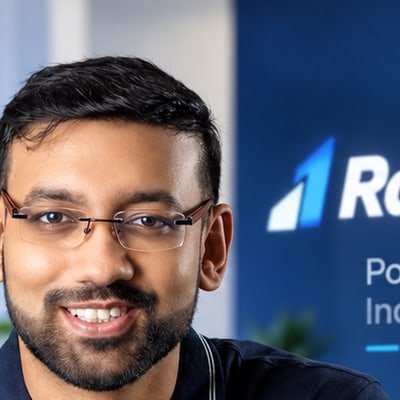
The idea behind ShopBack is almost too simple to sound like a business.
A decade of profitability discipline is about to be tested by a much harder problem: standing at the checkout, not just after it.
People already shop online. Retailers already pay a commission to whoever sent them the customer. ShopBack sits in that gap and shares part of the commission back with the shopper, as cashback, instead of keeping all of it as an anonymous affiliate network would.
It is not a novel mechanism. What is unusual is how far ShopBack has taken it — from a browser habit in Singapore to a nine-market network that reached unicorn status in 2026, and is now trying to move from the moment after a purchase to the moment of it.
From Browser Plug-in to Regional Network
ShopBack was founded in Singapore in 2014 by Henry Chan, Joel Leong, Samantha Soh and Shanru Lai.
The early product was narrow: a browser extension and a website that tracked a shopper’s click to a retailer, then paid back a share of the resulting commission as cashback.
Retention, not acquisition, was always the harder problem in that category — a cashback habit is easy to start and easy to abandon the moment a better rate appears elsewhere.
ShopBack’s answer was breadth. The network now spans Singapore, Malaysia, Taiwan, Indonesia, the Philippines, Korea, Thailand, Australia, Vietnam, Hong Kong and, as of 2025, Macau.
By its own count, that network now includes more than 20,000 brand partners and 20 million active annual members, processing roughly 500,000 transactions a day and having paid out more than $1.2 billion in cashback since launch.
The Discipline Behind the Coins
Consumer rewards businesses have a well-worn failure mode: subsidise cashback aggressively to win users, then struggle to make the unit economics work once the marketing budget runs out.
ShopBack’s slower path avoided that trap.
The company has reported adjusted EBITDA profitability for six consecutive quarters through its FY2026 fourth quarter, on revenue of roughly $239 million — a decidedly unglamorous, compounding kind of growth next to the blitz-scaling stories that defined an earlier era of Southeast Asian venture-backed startups.
That profitability is the real precondition for what came next.
A Unicorn, Twelve Years In
In 2026, ShopBack crossed into unicorn territory, reaching a valuation of roughly $1.4 billion — twelve years after its founding, a notably long runway by regional startup standards.
The company has raised in the region of $350 million to date, from investors including Temasek, Credit Saison, East Ventures, Westpac, 65 Equity Partners and Asia Partners.
A bank — Westpac — appearing on that list is itself a signal of where ShopBack’s ambitions were already heading: from a rewards network toward something closer to financial infrastructure.
From Affiliate Links to the Point of Sale
Every cashback network has the same structural limit: it only sees a transaction after the fact, through a retailer’s affiliate report. ShopBack’s more consequential recent move is trying to get inside the transaction itself.
ShopBack Pay launched in Hong Kong in October 2025, letting shoppers earn and redeem cashback in-store at the point of purchase, with Octopus added alongside Visa, Mastercard, Apple Pay and Google Pay as payment methods across more than 1,000 retail outlets.
A point-of-sale integration with restaurant technology platform Eats365 is scheduled to extend that into food and beverage merchants from July 2026, and a ShopBack Pay Later instalment product has followed the same playbook Cred and other regional fintechs are also running: take a financial moment a customer already has, and make the platform the place it happens.
The bet is that a network built on affiliate trust and scale can be extended into a payments product, rather than having to build that trust from nothing against entrenched bank and wallet incumbents.
What Comes Next
ShopBack Pay is, for now, a Hong Kong pilot inside a nine-market business. Extending it — regulatory approval by regulatory approval, market by market — is a materially harder undertaking than adding another retailer to an affiliate network.
The core question is whether ShopBack’s twelve years of patient, profitable growth as a rewards network transfers into the more capital- and compliance-intensive business of payments, where the competition is banks and wallets with far deeper balance sheets.
The company’s history suggests it is comfortable moving slowly. Payments infrastructure may not reward that pace as generously as cashback did.
The Cover Story View
ShopBack spent a decade proving that a simple idea — share the commission back with the shopper — could compound into a profitable, multi-market business without the cash-burn that sank flashier regional rivals.
That discipline is precisely why Temasek, Credit Saison and a retail bank were willing to back a twelve-year overnight success.
The next chapter asks something different of the company: not patience, but the ability to sit at the actual point of sale, inside the plumbing of how people pay, rather than quietly behind it.
If ShopBack Pay scales the way the original cashback network did, ShopBack becomes a payments company that happens to have started as a rewards habit. If it does not, the company remains what it has always been — very good at what happens after the purchase, not during it.
Know a brand or leader like this? Nominate them for Emerging Premier Brand, Asian Premier Brands and Leaders 2026. Entries close 16 October 2026.
Nominate



 Cred · Fintech