Most of Indian fintech has chased the same customer: the underbanked majority, sold a first credit product, a first loan, a first digital wallet.
“This is what privilege looks like.”
Cred went the other way.
It built its business around the minority who already had good credit — and made paying a credit card bill on time feel like joining something exclusive rather than completing a chore.
That inversion has taken the company from a single rewards app to a genuine financial platform, and in 2026 it drew the kind of attention few Indian fintechs ever see: a $900 million investment from Meta, and a decision that sent its founder to run WhatsApp for the world.
From Bill Payments to Financial Platform
Cred was founded in 2018 by Kunal Shah, who had already built and sold one fintech company — FreeCharge, acquired by Snapdeal in 2015.
The initial product was narrow by design: verify that a user holds a good credit score, then reward them for paying their credit card bill through the app, in cash-back, brand offers and access to members-only drops.
That narrowness was the strategy.
By restricting membership to India’s most creditworthy consumers, Cred built a userbase advertisers wanted to reach and a brand that read as aspirational rather than transactional.
It did not stay narrow for long.
CRED Stash added lending. CRED RentPay let members pay rent on a credit card. CRED Flash brought buy-now-pay-later onto UPI rails. CRED Escapes moved the company into luxury travel. Insurance and wealth products followed.
Each addition followed the same logic: take a financial task members already had to do, and make Cred the place they did it.
The Numbers Behind the Exclusivity
For years, the loudest thing about Cred was its marketing — expensive, surreal television spots built around Bollywood cameos, and Kunal Shah’s own reputation as India’s most quoted startup contrarian.
The business case took longer to show up in the numbers, but by the mid-2020s it had.
Revenue rose from roughly ₹1,485 crore in FY23 to ₹2,473 crore in FY24, then to ₹2,735 crore in FY25 — a sustained run of growth alongside a narrowing loss.
More than 90% of that revenue now comes from three verticals: lending, payments and insurance — not brand partnerships or rewards breakage.
Cred says its platform now processes more than 40% of India’s credit card bill payments by value, with close to 17 million members transacting monthly.
That is the case Cred had to make to be taken seriously as financial infrastructure rather than a loyalty app with good production values: real transaction volume, real lending revenue, real insurance distribution.
Meta’s $900 Million Bet
In June 2026, Meta announced a $900 million investment in Cred, taking roughly a 20% stake and valuing the company at approximately $4.5 billion.
The strategic logic sits with WhatsApp.
India is WhatsApp’s largest market, with more than 500 million users, and Meta has spent several years trying to push the platform beyond messaging into payments and commerce.
A stake in a company that already processes a meaningful share of India’s credit card payment volume gives Meta a faster route into that ambition than building the capability from scratch.
The deal reportedly does not give Meta access to Cred’s customer data — a distinction Cred has been careful to make public, given how central trust is to its brand.
A Founder Leaves the Building
The more startling part of the announcement was not the cheque. It was the appointment that came with it.
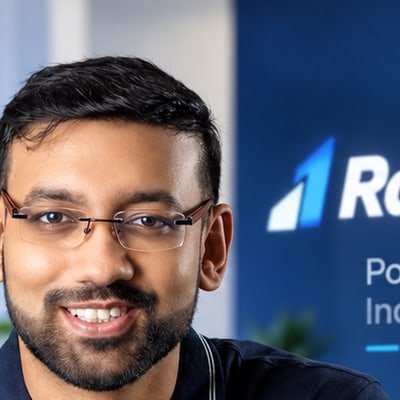
As part of the investment, Meta named Kunal Shah as its new Global Head of WhatsApp, and Shah stepped down as Cred’s chief executive to take the role — while retaining his stake in the company he founded.
Miten Sampat, who had overseen strategy and finance at Cred since 2020, took over as interim chief executive.
The company has said its board is working on a longer-term leadership structure as Cred prepares for an eventual initial public offering.
It is an unusual handover: a founder whose personal brand was inseparable from the company’s marketing, leaving operational control at the exact moment the business is being valued for an IPO.
What Comes Next
Cred’s original advantage was cultural — a founder who could make a rewards app feel like a status symbol, and advertising expensive enough to reinforce it.
Its next test is institutional: whether the lending, payments and insurance businesses that now generate most of its revenue can keep growing under a management team built around finance and strategy rather than founder-led brand instinct.
A Meta shareholder on the register adds a second question — whether a 20% stake stays passive, or starts to shape how aggressively Cred pushes into WhatsApp-adjacent payment rails in a market where that distribution would be extremely valuable.
Both questions will matter more than the marketing ever did, if an IPO is genuinely the destination.
The Cover Story View
Cred’s founding bet — that India’s creditworthy minority was an underserved, monetisable audience — has been vindicated by the balance sheet, not just the brand campaigns.
But the company that goes toward an IPO will not be led by the person whose personality built its identity.
That is the real story inside the Meta headline: not just a $900 million cheque, but a test of whether Cred the platform can outgrow Cred the founder’s persona.
If it can, the exclusivity that once applied only to its members may end up describing the company itself — one of a very small number of Indian fintechs with a global technology platform as a shareholder.
If it cannot, the Meta deal will be remembered as the moment Cred’s most valuable asset walked out the door to run someone else’s app instead.
Know a brand or leader like this? Nominate them for Emerging Premier Brand, Asian Premier Brands and Leaders 2026. Entries close 16 October 2026.
Nominate



 ShopBack · E-commerce